Showing posts with label spirituality. Show all posts

12.15.2009

My Stance On Guns

I'm realizing more and more just how much my convictions and personal beliefs are setting me apart from almost everyone around me -- particularly the Christians I know. For one thing, I'm a Democrat (which, of course, sets me apart from about 90% of the US evangelical population (which I'm cool with)). I have a fairly liberal view of the world, the economy, society and even the Gospel, to a certain extent. But it's always a strange and lonely feeling knowing that, of nearly all the people I associate myself with, I'm the only one with these beliefs.

This came more into focus last week when my stepmom informed me that she bought my dad a rifle for Christmas -- something that I'm moderately cool with, but not really. See, I'm fairly anti-gun; not a complete gun-annihilation advocate, but not totally indifferent about firearms, either. I told Megan about my feelings toward guns and she thought I was ridiculous. She then informed me that her family and I will have nothing to talk about, really. She said, "I shoot guns. My entire family shoots guns and goes hunting." I told her my family is the same -- I'm the only person in my family that wants nothing to do with guns.

But, I wasn't always this way.

There was a time when I used to hunt too, with my grandfather and uncle -- I hunted turkey, pheasant, quail, rabbit, deer... If it moved, had four legs or two wings and had breath in its lungs, I'd shoot at it. Now, up until the incident I'm going to detail here, I was never a good shot. I remember a time when a pheasant was perched on a tree branch, just sitting there and I fired at it three times and missed every shot -- in fact, it just continued to sit there, as though it were mocking me. My grandfather said, "There must be something wrong with the sight or maybe the barrel is bent." He grabbed my gun, lifted to his shoulder, fired and dropped the pheasant in one shot.

When I was 11, I went on my final hunting excursion. We were at a pheasant/quail/turkey farm in Wisconsin called Blondhaven -- at this farm, they breed birds, fatten them up, blindfold them and cage them (so they won't peck at each other as much), then release them into an enclosed area so hunters can come in and shoot them. Somehow, during this particular trip, a turkey had gotten out of its cage and ran into the field, where the three of us were hunting. With its blindfold over its eyes, the bird became wild and frantic, running every which way, trying to avert the bullets it heard being fired at it from every direction. It then ran directly into a tree, face first, and collapsed. I approached the bird and was amazed to find it still breathing -- I figured it had broken its neck. My uncle (who was drunk, by the way), slung the strap of his rifle over his shoulder and retorted, "Well, Andy -- looks like you have a clear shot at this one. Put it out of its misery." I lifted my gun, a 12-gauge shotgun to my shoulder, aimed it directly at the bird's face and blew its head off. There was nothing left but a neck, spilling a pool of blood onto the frozen grass and February snow. My uncle laughed, "Yep! You got that one, for sure!"

A wave of shame came over me. I had never shot anything before and my first kill was a heartless, brutal and incredibly violent attack on a blindfolded bird -- one of God's first creations -- that didn't stand a snowball's chance in hell against the power of my shotgun. I dropped the gun into the snow, turned and ran, as fast as I could, back to the parking lot and locked myself in the van we came in. I think I cried for about two solid hours, begging for God to forgive me the horrible wrong that I had done.

I've never so much as held a gun since, despite the arguments I've heard from friends and family over the years that guns are just fine and dandy.

And I've listened to and even considered all of your arguments; I've heard you tell me over and over about the thrill, the rush you get when you bring down a ten-point buck. I know that you believe shooting wild game is nothing more than sport, like baseball or tennis. I've heard the argument, "Well, we eat everything we kill" (and to you, I say, "Go to the grocery store! You don't HAVE to murder animals just so you can eat! You're not a caveman or a tribesman!"). And if I have to hear, one more time, "The Constitution says I can have a gun to protect myself"... Oh man. That stance has become one of the biggest straw man arguments to support gun use.

And there are so many stories I could relate to you, to tell you why I have such a problem with guns: I could tell you that it was a gun that killed John Lennon; I could tell you that it was guns that killed three of my cousins -- one during a hunting trip, one from suicide, one from just being stupid and irresponsible with a friend; I could tell you the amount of times I was shot at while living in the East side of Aurora; I could tell you the amount of money that the government is making under the table, thanks to arms dealing.

But we both know that we're never going to convince one another that the other is wrong. I know that the Constitution permits everyone to be a desensitized, gun-toting buffoon and you know that I have every right in the world to be an oversensitive, liberal crybaby. Whatever.

But before you lift the gun to your shoulder and scope out your next big kill, ask yourself a few questions: 1) is this what God meant when he created Adam to "rule over" the rest of His creation? Is this how God intended for me to respect His creation? 2) (and this one is incredibly cheesy) WWJD? Honestly. What WOULD Jesus do? I'm not sure the man who stated "he who lives by the sword will die by the sword" would be the biggest gun advocate. I may be wrong, but there's something wrong with this picture...

10.18.2009

My Divine Encounter

A couple weeks ago, I worshipped for the first time in almost two years. Granted, I have been to churches a couple times since I left my home church, Campus Missions International, but I never truly WORSHIPPED since then -- at these churches, I was merely going through the motions and playing "Church." I simply went because I felt like I should, or, because it was the "right thing to do" -- whatever that means, I went because I was invited by a friend, I went because I had nothing else to do that particular Sunday morning; but I never went to actually experience God. I never went to worship.

So, two weeks ago, I decided it was time to go back. I had been meeting with my old pastor, Tom May, all summer long, talking discipleship, spirituality and relationships. After about four months of talking, I decided I wanted to go back to church. Now, church and I have a strange relationship -- I realize that I am a part of The Church, but I really don't identify with church. I understand the importance of friendships and relationships within The Church, but I never felt that I had to build said friendships and relationships within church -- I've always felt that I could be "outside the box." I also understand the importance of going to church to learn from sermons, but I can learn just as much in my own personal time.

I've never really enjoyed going to church. I think it's because, as a kid, I was forced to, and the church we went to was an insane cult. When I became an adult, I realized I didn't have to go, so I stopped, but then later started going again. In my most recent church experience (two years ago), I was beaten up badly by a few people in the church and I was so hurt by the situation, that I left again.

But when I went two weeks ago, I felt like I had come home. I felt like the prodigal son, in a way. In fact, as soon as I walked in the door, the person that I had the biggest falling out with rushed up to me, threw his arms around me and hugged me for a solid couple minutes, all the while telling me how great it was to see me again. It was great to see him too. We had reconciled last year over breakfast, but after this night, I felt like the bridge that was torn down had finally been fully restored. After the night was over and I had talked to almost everyone there, I felt like I had restored a lot of relationships. I felt that CMI was a safe place for me again. So I decided to return for good (or until I'm called elsewhere).

Sadly, I couldn't go last week because I was out of town, but I made sure to go last night. Throughout Saturday, there were a few times when I was thinking I didn't really want to go after all, but I fought the urge to stay home and do nothing. And it made all the difference that I went.

Let me preface this story by first saying that for the past couple weeks, I have been growing increasingly disconcerted with my state of unemployment. Last week, I had two interviews at Target and was turned down. I was turned down by TARGET. How does that even happen?? And THAT was the first interview I've had since March, when I was turned down by Schofield Media Group. I'm still up for a position with the Chicago Dental Society Foundation, but I have still yet to hear from them. Needless to say, I am growing more and more discouraged about the entire situation. Plus, with my recent breakup and family troubles and feeling lonely and battling depression, I've been going through a rough patch. So, last night I drove to church, praying the whole way for my life. I kept repeating over and over, "Lord, Jesus Christ, have mercy on me. Lord, Jesus Christ, have mercy on me." I have found this prayer to be incredibly comforting as of late.

CMI services are notorious for being long, drawn out productions. The worship portion lasts at least an hour, the preaching lasts at least an hour and the altar call typically runs upwards of an hour or more. But last night was different -- last night, the worship portion lasted about two and a half hours. The preaching didn't start until 8:45 and the service starts at 6. The reason the worship lasted so long was that one of the women started prophesying over the congregation and speaking about claiming the victories and promises God has for us. She then asked for everyone who wanted prayer and desired to claim what God had for them to come forward and nearly everyone in the church started pressing in around the platform to pray. I was one of them.

I prayed for a bit and wasn't really feeling anything, so I prayed some more. And more. And more. I started pressing into the Spirit and fighting everything around me and tearing down the walls that separate me from God. I wanted to have a Divine encounter. Two people I had never met before came up behind me while I was praying and laid their hands on me and started praying with me and for me. Then, the woman gave me the most cryptic prophecy I've heard yet in my life: "God is saying, 'Your calling hasn't changed.'" Upon hearing that, I burst into tears and wept for half an hour. When I collapsed to my knees, about a quarter of the congregation gathered around me to pray for me.

After I dried my face and finished up my prayer, I was greeted by the woman who called for the altar call. She said that God was speaking to her about me in particular and she wanted to know if He was speaking to me as well. She said, "I'm going to ask a question to God and I want you to repeat it and listen to see if He says anything. Then we'll compare our answers. The first question is, "'God -- will You do this thing in my life?'" I asked and wept again when I received my answer. She said, "He said to me, 'Yes.'" I replied, "He said to me, 'I'm the one who is waiting for you.'" "Wow! Actually that's a great segues to my next question: 'What do I need to do to be in agreement with You?'" Again, I felt broken by the answer I received. She said to me, "He said to me, 'Come to Me,' and He was gesturing for you to come forward." I replied, "He said to me, 'Stop doubting Me.'"

Looking back, I'm perplexed by all of it. I mean -- I know exactly what God means by "Your calling hasn't changed." At the same time, I have no idea what He's talking about -- what IS my calling?? Ireland or employment?? I'm not so sure.

But it's great to know that I am once again FEELING God in my life. I am once again having encounters with the Divine that leave me craving more. I'm overjoyed, but discontent.

10.03.2009

My Road Full of Promise, My Head Full of Doubt

Ever since I was a boy, I've wanted to, one day, move to Ireland. It has been my unattainable goal, my unreachable destination. My eyes have had shamrocks and green hills and grey skies in them and my appetite for Guinness has been insatiable. There are times when I wake up, look out the window to a particularly overcast day and my heart swoons, "What I wouldn't give to be in Ireland right now, too ra loo ra loo ra."

My fascination began when I was eight years old. My class was having our international day fair and it was each student's assignment to build a poster board presentation for their country of choice. At that time in my life, I was fascinated with the Czech Republic because there's a large portion of my father's family from former Czechoslovakia. My presentation was decent enough, but nothing special. It seemed nobody else my age really cared about the former Soviet bloc.

One of my friends, Andrew Hansen, chose Ireland. If you had ever met this kid, you'd immediately know why: he was a tiny, pasty white ginger kid with the clearest green eyes and the brightest red hair. He was Irish Catholic, a Notre Dame fanatic and was one of the sweetest, most cheerful kids in the school.

For whatever reason, I decided early on that he would be nemesis and that I hated him. Obviously.

However, even I, in all my hatred for the Ginger Boy Wonder, couldn't help but gaze in wonderment at his glorious display for Ireland. It was heavenly -- the most beautiful pictures of rolling green meadows, and castles, and grey skies, and rosy cheeked people playing instruments in pubs and on street corners. He even had his mother bake homemade Irish soda bread for the class and he brought in a boombox that played a CD of Van Morrison with the Chieftains. And when I ate of the bread and drank deep the sounds of that album, my blood turned green and my heart beat with the rhythm of "Cockles and Mussels (Alive-Alive-Oh!)"

And, indeed, I felt alive. That was the moment I decided I wanted to live in Ireland for the rest of my life. Of course, when my grandmother on my mother's side informed me that my blood is MOSTLY Irish, that only added fuel to the fire.

. . . . . . . . . . . . . . . . . . . . . . . . . . .

A few years ago, I was surfing YouTube and found a video made by my (now) friend, Kyle Holland.


My heart was so broken by the interviewees that I embedded to the video to my MySpace and urged all my friends to join me in intercession and prayer for the country. I was surprised, a few days later, when Kyle emailed me and asked me about my desire to move to the country. I was even more surprised when I told my pastor about the email and found out that my pastor actually had known Kyle for quite a while. They went to a ministry training called Maranatha! together.

That was in 2006 or '07. Ever since I've been assuring Kyle that I've wanted to come to Youghal (the city he lives in) and help him with church plants, by leading worship or whatever. Sadly, that has yet to happen. It seems that whenever I have the opportunity to go, the opportunity gets dashed against the rocks. Everytime I save up enough money to go, I have to spend it on something; whenever I have time to go, I get a job; whenever I earn time to take off work, I get laid off and lose all the money I'd been saving up on trying to survive. It's always something.

. . . . . . . . . . . . . . . . . . . . . . . . . . .

For the past week or so, Ireland has, once again, been on my heart and mind, so I've been praying for the country and trying to get caught up on recent news. Then, Ireland started coming up in everyday conversation with friends. Then, I started receiving an Irish e-newsletter in my email that I never renewed my subscription for and stopped receiving about a year ago. After all that, Kyle sent me a comment on Facebook that simply asked, "What are your plans now?"

Could all these occurrences by coincidences?

Ireland has never left my mind; I want to go there now just as much as I always have, if not moreso. However, now, unlike my teenage years or my college years, I have responsibilities -- I have bills to pay, careers to pursue and jobs to work. And, right now, I'm in the running for a very good job in Chicago. In fact, I'm the forerunner for the position. And this isn't just some job -- it's a legitimate career that has amazing pay and great benefits. And, if I got it, I'd be able to fulfill my other life-long dream of moving to Chicago.

And there, as the Bard says, lies the rub.

I am torn between two dreams.

9.17.2009

My Tree, Planted By the Waters

This is my favorite scripture:

He is like a tree planted by streams of water that yields its fruit in its season, and its leaf does not wither. In all that he does, he prospers. The wicked are not so, but are like chaff that the wind drives away. - Psalm 1:3-4 (ESV)


Of all the verses about love and forgiveness and mercy in the Bible, none of them quite compare with this one. There's so much about Psalm 1:3-4 that I love: the imagery, the language, the simile.

For one thing, I've always been particularly attracted to trees. I identify with them.

I love their strength and the majesty of them. I'm fascinated by the science of them -- the way they grow, their root systems, the way they live and breathe. I'm in awe of their usefulness: they provide shade on sunny days for us, they provide homes for animals, they provide us with the paper we write on and the books we read, they provide the wood needed to make homes and bridges and bookshelves. And I'm fantastically devasted by how cavalier we are to trim them, cut them down, burn them, destroy them -- all for our own sake.

However, throughout the Bible, trees are spoken of with the same great reverance I have for them (God used a tree as the ultimate source of knowledge of good and evil in Genesis, scriptures use trees as comparisons all over the place, Jesus was crucified on a tree, etc, etc). I do believe God delights in us most -- we are His ultimate creation. However, I think trees come in a very close second.

I was at a church in Crown Point, Indiana, playing a show with my band at the time and after we finished playing, and were getting ready to leave, some of the members of the church decided to pray for each member of the band. When they came to me, a girl prophesied over me and said, "I see you as a tree, standing alone in a field. You are tall, beautiful, majestic, strong. There is a storm and a strong wind coming that is going to blow you sideways. It's going to be so strong that it will bend your trunk until you are parallel with the ground. But if your roots are deep enough and you are strong enough, the storm will cease, the winds will die and you will be brought back to your upright position. If not, your trunk will snap and you will die." Shortly thereafter, I left my church, left my band and became an alcoholic. Guess what happened to my tree?

And this is why I had Josh Richter paint my guitar the way he did -- everytime I pick Addison up to play, I am reminded of this verse: "I am like a tree planted by streams of water." I want to never forget it.

I never want to be standing alone in a field when a gale comes and snaps me in half again; I want to be standing tall and strong, firmly planted by the waters that, everyday, refresh and nourish me. I remember what it was like to feel completely helpless in the midst of life's storms and I remember what happened when I wasn't strong enough to stand up to the winds. In the words of Lindsey Buckingham, "I'm never going back again."

I saw a video of Donald Miller addressing an audience yesterday morning and even though it's only two minutes long, I was captivated by it:


In all honesty, I had never considered this aspect of my favorite verse -- I was always too mesmerized by the language and how I identify with it. But Miller makes an interesting point: tall, strong, majestic trees don't become that way overnight. It is a painfully, woefully long process for a tree to reach its peak. Even a tree's death is prolonged over several years. In this society, it is easy for us to become discouraged when things don't happen immediately. Almost everything is immediately available to us: fast food, high speed internet, bittorrent, thrift shops, get-rich-quick schemes, media. Everything is available to us at minimal time and investment. We all understand that these things may not be the best quality and may not be the best for us, but what do we care so long as we get it now?

That's not the spirituality for me. That's not the faith I want.

9.07.2009

My Former Self

I picked up the new Derek Webb album, Stockholm Syndrome, this past weekend. I absolutely love Derek Webb and have ever since he left Caedmon's Call; his lyrics are so passionate, so challenging and, musically speaking, he has been a bit of a chameleon with every album. There was the jangly roots music of She Must and Shall Go Free, the stark, atmospheric darkness of I See Things Upside Down, the stripped-down acoustic guitar work on Mockingbird and a bit of 1960's Brit-pop revival on The Ringing Bell. For his latest release, he has left the majority of his instruments at home, save for an acoustic guitar on a couple tracks, and opted for a more digital approach. The entire album is dominated by drums, keyboards and computers. It's actually kind of reminiscent of if Moby were doing more upbeat stuff.

There's been a lot of controversy surrounding Stockholm Syndrome in the music industry since the time it was supposed to be released (in May) up until now. Of course, Derek Webb always stirs things up with every release and I've always wondered just how long it would take for his record label to say "enough is enough." Apparently, he's finally done it.

The original statement the record label, INO, released stated that the lyrics on the new album were too harsh and too risque for Christian audiences, so they wouldn't be releasing it unless he changed the lyrics (particularly for one song). Now, Derek Webb is a man who will not back down when he believes in something and so he refused to change the lyrics. According to him, that one song that is getting the most heat is the most important song on the album, so he was even more adamant about keeping it as is. Deliberation ensued over the entire summer and the compromise reached was INO agreed to release a censored version of the album that didn't include that one song. However, Webb could make an uncensored version of the album available to his fans on his website.

"That one song" is entitled "What Matters More."

So I downloaded the uncensored version (obviously) and wasn't surprised when I felt that I had been slapped in the face many, many times over with each song (some songs even slapped me more than once!). And it wasn't an offensive slap in the face, I don't think. A lot of Christians will be listening to the lyrics on this album and they will be incredibly offended (and they should be -- Webb is ruthless this time around!), but I wasn't. My slaps in the face were more like wake-up slaps; like "get with the program" slaps.

The song "What Matters More" was the biggest slap of all.

This song has served in my life as a call to arms. It awakened ancient feelings inside of me, stirred up emotions and passions that have been docile for a long, long time. But, before I continue, perhaps I should write down the lyrics for all of you so you can have perspective of what I'm talking about here...


You say you always treat people like you like to be
I guess you love being hated for your sexuality
You love when people put words in your mouth
'Bout what you believe, make you sound like a freak

'Cause if you really believe what you say you believe
You wouldn't be so damn reckless with the words you speak
Wouldn't silently conceal when the liars speak
Denyin' all the dyin' of the remedy

Tell me, brother, what matters more to you?
Tell me, sister, what matters more to you?

If I can tell what's in your heart by what comes out of your mouth
Then it sure looks to me like being straight is all it's about
It looks like being hated for all the wrong things
Like chasin' the wind while the pendulum swings

'Cause we can talk and debate until we're blue in the face
About the language and tradition that he's comin' to save
Meanwhile we sit just like we don't give a shit
About 50,000 people who are dyin' today

Tell me, brother, what matters more to you?
Tell me, sister, what matters more to you?


Intense, right? Especially for a Christian artist! I applaud Derek Webb for his ability to step up to the microphone and let it fly. It takes a lot of courage to be able to preach Truth to a bunch of Christians who definitely don't have their hearts in the right place.

It is an undeniable fact that for the past, let's say 30, years, the two main issues on the average evangelical's agenda have been abortion and homosexuality. If there's one thing I can say about evangelicals over the past couple decades, it's that we have our eyes on the wrong things. Not only that, but we're proud of it! We flaunt it! There's another Derek Webb song that spoofs the old hymn, "They'll Know We Are Christians By Our Love" -- his version is called "They'll Know Us By Our T-Shirts." We hold up big signs, form picket lines, firebomb abortion clinics, wear t-shirts with outrageously cheesy things written on them (like "My boss is a Jewish carpenter" or "In case of rapture, you may have this shirt").

But where is the LOVE?

That's the point Derek Webb is driving at in this song -- he's not just trying to ruffle feathers, he's asking "Why are you so concerned with condemning homosexuals and forsaking LOVE?"

Another thing I appreciate about the song (and this is a subtle thing) is his use of the words "damn" and "shit." Here are some of the comments people had about it on YouTube. First, the negativity:

AMP27890: I find it interesting how people try to excuse his use of vulgar words. If this is the state that Christian music is sinking to, I don't want it.

funglu: Derek Webb is becoming synonymous with cheap publicity stunt. This is creative? Really? He needs to credit his sources. He isn't the first nor the last to cuss for affect and try to appear clever.

swiftyguitar: First of all, "let no unwholesome talk come out of your mouth", and "everything you do, do for the glory of God". Will these word choices profit the church? Not for me to judge.... But sidenote, weird style for Derek Webb.

cropfield77: in my opinion...derek webb was wrong when he used two vulgar words that are labeled as foul words by our culture...because..as JESUS commands it...we should not cause anyone to stumble from their christian faith...but i have no problem with derek webb's message of love towards everyone...no matter how 'sinful' they are...because in the end...we are all sinful...in need of saving grace

TheCartercrew: "hate what is evil; love what is good"...if we are going to hate the evil that exists in our churches regarding the selective loving...then we must also hate the use of profanity as well. both evils get thrown into the same pot. love d.w. just think that we shouldn't put sins on a scale. unholiness is unholiness! "be innocent in evil and wise in what is good." innocent in ALL evil...wise in all things that are good...the Lord doesn't even want us to know those words, much less use them.


Now, the positivity:

brahimdrunk: I love the fact that so many Christians are taking the bait that Derek Webb sets. What matters more to you: the fact that 50,000 people are dying every day due to malnutrition/starvation or the fact that I said shit?

coconut888: AMP27890 and sportzguy1984 have missed the point... completely. it would seem they care more about using "shit" over tens of thousands of people dying without Christ. and that's exactly what he wants us to think about. just as believers would "love our neighbors" in treating gays by harassing them for their sin instead of grieving over their own. is it not God who changes people through the gospel? let the message do its work. btw, the bible has even more controversial words than the song.

xkerchx: I enjoy the Tony Campolo allusion: "I have three things I'd like to say today. First, while you were sleeping last night, 30,000 kids died of starvation or diseases related to malnutrition. Second, most of you don't give a shit. What's worse is that you're more upset with the fact that I said shit than the fact that 30,000 kids died last night." - Tony Campolo

parksj1: Paul used a lot of language that some considered offensive. Jesus did too, even if it was the truth behind the words and not the words themselves that offended people. What's funny is that he juxtaposed the word "shit" with 50,000 people dying just to make the point that "shit" would be more controversial than 50,000 people dying. And he was right. I haven't heard one person say "What?! Why are all those people dying??" But tons have talked about the use of the word "shit."


And my personal favorite...

jw1453: I don't believe D.W. was wrong in his choice of words. I actually believe he was right on. I've been in ministry for 13yrs. and I see what he talks about in this song everyday. Granted, his approach is extreme, but these are extreme times. As christians, we've become so apathetic in our faith that it sometimes takes an extreme point of view to stir our souls again. If this song causes you to stumble, ask yourself why. Just because something is labeled socially taboo doesn't make it wrong.


I'd like to personally thank jw1453 for saying, "As Christians, we've become so apathetic in our faith that it sometimes takes an extreme point of view to stir our souls again." I never thought my personal walk with God would come to this, but I've been very, very apathetic in my faith. I've become selfish, self-centered and stagnant in my faith.

The reason I love this song so much is that it stirs up a memory of my former self. This song reminds me of a time when I cared about something, when I was passionate about something. I used to live for change and social justice. I used to go to protests and volunteer at soup kitchens and blog about my ideals and opinions and hold signs in Chicago that said "FREE HUGS!" and pray with random people walking around NIU. There was a time when I watched the news and saw reports of starving people, and terrorist attacks, and wars, and famines, and natural disasters and I would WEEP -- just break down in tears in front of the television screen -- because my heart was so broken for those people. There was a time when I loved people passionately.

And I was very outward with my love and passion. This wasn't just an internal thing for me, the externals definitely displayed my zeal as well. In high school, I was voted by my peers as "Most Likely to Impact the World." In college, I was president of a ministry group on campus that generated a lot of heat for things we said and did. Everyone around me knew I was ready to help change the world. I wanted to be put on the front lines.

Now, people are surprised when I say, "Hey, I'm Christian too!" Their eyes open wide and they ask, "Really!? I had no idea!" What a sad state my walk with God has sunk to. If the hymn is right (and I believe it to be so), everyone should know I am a Christian by my love. So, why is it so surprising when people find out that I'm Christian?

8.18.2009

My Self Worth

Monday morning, I woke up in a mood.

I felt worthless and defeated and frustrated with life. Megan sent me a text around noon that she was lined up for this amazing job opportunity that would entail her going to France every summer for free. As happy as I was for her (and I genuinely was), I was also a little discouraged that my ship has yet to come in.

Then I felt even more worthless. And the whole reason I was feeling so worthless was because I don't have a well-paying job.

How sad.

I was at my friend, Josh's, house and he was at work, so I didn't really have anything to do. As I sat on the couch, staring out the window in pure dejection, Josh's dog pawed at it and yipped, letting me know he wanted to go outside. So I did.

I sat in the back yard, watching him run around, chasing butterflies and rolling around in the grass. I watched the limbs of trees across the pond dance in the breeze and the clouds above me, scurrying by. I laid in the grass, folded my arms beneath my head, closed my eyes and felt the warmth of the sun on my face. I played tug of war with the dog and let him jump all over me and lick my face and ears and nip at my fingers. I grabbed my guitar and played a couple worship songs and even prayed for a bit.

I spent five hours in the backyard doing, for all intents and purposes, nothing.

And my troubles all seemed to melt away.

And I couldn't help but wonder, that maybe this was what we actually were created to do -- to live in communion with God and to enjoy His creation. That maybe work and jobs and careers shouldn't be my primary concern, that maybe loving and living with God should be.

7.27.2009

B.C. --> A.D.

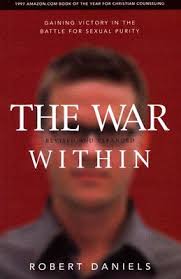
Joshua Riley gave me a book to read a few weeks ago called The War Within, by Robert Daniels. Now, I've read a lot of books in my day -- even a lot of books about sexual purity, like this one. And, in all honesty, there's only two versions of the same book: there's the ultra-conservative version that, essentially, reads, "Masturbation is wrong, so don't do it;" then there's the version that, essentially, reads, "What's the real, internal problem? What's the condition of your heart? Here's how to deal with that."

The War Within is a pretty decent combination of both approaches, and, honestly, I've read it and heard it all before.

However, there was one particular section that I found very encouraging and I'd like to share it with you here, but in my own words so as to avoid plagiarism. Every entry will follow this outline:

B.C. (before Christ):
A.D. (after my spiritual death):

Scripture:

I am unworthy/unacceptable
I am accepted and deemed worthy

Psalm 139:13-24, Romans 15:7

I am a failure
I am victorious

2 Corinthians 3:5-6, Philippians 4:13

I am fearful
I am free from fear

Psalm 34:4, 2 Timothy 1:7, 1 Peter 5:7, 1 John 4:18

I am weak
I am strong in Christ

Psalms 37:34, Daniel 11:32, Philippians 4:19

I am in bondage
I am free

Psalm 32:7, John 8:36, 2 Corinthians 3:17

I'm not smart
I have God's wisdom

Proverbs 2:6-7, 1 Corinthians 1:30, James 1:5

I am unloved
I am loved

John 15:9, Romans 8:35-39, Ephesians 2:4, 5:1, 1 John 4:10-11

I am unwanted
I have been adopted by God

Romans 8:15-17, Galatians 4:5-7, Ephesians 1:5, 1 John 3:2

I am guilty
I am forgiven

Psalm 103:12, Ephesians 1:7, Colossians 1:14-20, Hebrews 10:17

I am depressed and hopeless
I am hopeful

Psalm 16:11, 27:13, 31:24, Romans 15:13

There is nothing special about me
I have been chosen

Psalm 139:1, 1 Corinthians 1:30, 6:11, Hebrews 10:10-14

I am not good enough
I am perfect in Christ

Colossians 2:13, Hebrews 10:14

I am defeated
I am victorious

Romans 8:37, 2 Corinthians 2:14, 1 John 5:4

I have no strength
I have God's power

Acts 1:8, Romans 8:9-11, Ephesians 1:19, 3:16

I feel condemned
I am blameless

John 3:18, Romans 8:1

I am alone
I am never alone

Romans 8:38-39, Hebrews 13:5

I have no one to care for me
I am protected and safe

Psalm 27:1-6, 32:7-11, 41

I can't reach God
I have access to God

Matthew 7:7-8, Ephesians 2:6, 1 Peter 2:5-9

I am afraid of Satan
I have authority over Satan

Colossians 1:13, 1 John 4:4, Revelation 12:7-11

I have no confidence
I am confident

Proverbs 3:26, 14:26, 28:1, Ephesians 3:12, Hebrews 10:19-22

7.14.2009

Over the Wire Bible Study #6 -- Luke 2:1-21

Hello, Luke chapter 2 -- I've been looking forward to seeing you! Thus far, this has been a strange journey we've been on; but I am eagerly anticipating the adventures we shall experience now that we are together.


. . . . . . . . . . . . . . . . . . . . . . . . . . .

Luke 2:1-21

1 In those days a decree went out from Caesar Augustus that all the world should be registered. 2 This was the first registration when Quirinius was governor of Syria. 3 And all went to be registered, each to his own town. 4 And Joseph also went up from Galilee, from the town of Nazareth, to Judea, to the city of David, which is called Bethlehem, because he was of the house and lineage of David, 5 to be registered with Mary, his betrothed, who was with child. 6 And while they were there, the time came for her to give birth. 7 And she gave birth to her firstborn son and wrapped him in swaddling cloths and laid him in a manger, because there was no place for them in the inn.

8 And in the same region there were shepherds out in the field, keeping watch over their flock by night. 9 And an angel of the Lord appeared to them, and the glory of the Lord shone around them, and they were filled with fear. 10 And the angel said to them, "Fear not, for behold, I bring you good news of great joy that will be for all the people. 11 For unto you is born this day in the city of David a Savior, who is Christ the Lord. 12 And this will be a sign for you: you will find a baby wrapped in swaddling cloths and lying in a manger." 13 And suddenly there was with the angel a multitude of the heavenly host praising God and saying, 14 "Glory to God in the highest, and on earth peace among those with whom he is pleased!"

15 When the angels went away from them into heaven, the shepherds said to one another, "Let us go over to Bethlehem and see this thing that has happened, which the Lord has made known to us." 16 And they went with haste and found Mary and Joseph, and the baby lying in a manger. 17 And when they saw it, they made known the saying that had been told them concerning this child. 18 And all who heard it wondered at what the shepherds told them. 19 But Mary treasured up all these things, pondering them in her heart. 20 And the shepherds returned, glorifying and praising God for all they had heard and seen, as it had been told them.

21And at the end of eight days, when he was circumcised, he was called Jesus, the name given by the angel before he was conceived in the womb.


---> The inconvenient Truth.

This is going to sound a little weird, but I love how inconvenient the arrival of the Messiah was. It was "an inconvenient Truth," if you will.

Mary and Joseph led normal, everyday, middle class lives. They worked, they tended to their families, they paid their taxes, they worshiped their God; there was nothing out of the ordinary about their lives. That is, until Jesus appeared in their lives.

First of all, as already mentioned in a previous blog, Mary was an unmarried virgin. Her pregnancy very well could have led to public chastisement, alienation from her friends and family, ridiculed, labeled "insane" -- she even could have been disowned by her parents! "Excuse me?" they'd ask, "You say that Jehovah impregnated you with the Messiah!? That's blasphemy!" Who would believe such a ridiculous story? There is a good portion of the world's population that refuse to believe such a fantastic story even today!

...Jesus' arrival brought with it criticism, insults and slander.

And Joseph wouldn't have been spared from such ridicule either. People would have called his bride-to-be a slut, a whore -- who would've believed Mary's tale? I'm sure even Joseph was skeptical at first! His first thought was probably "My fiance cheated on me."

....Jesus' arrival brought with it skepticism, doubting and suspicion.

Now, Luke doesn't go into as much depth as Matthew does, but there were a lot of events surrounding the birth of Jesus. For one thing, as Luke does mention, Caesar Augustus instated a registration, so that all of the taxpayers in the area would be on file. This, of course, is why Mary and Joseph had to travel to Bethlehem (Bethlehem was Joseph's native city). Furthermore, the journey from Nazareth to Bethlehem is no easy feat -- it was long and treacherous, over mountains, into valleys, across rivers and deserts. Joseph, of course, had to walk while his young, pregnant bride rode safely upon the back of a donkey.

...Jesus' arrival brought with it a long, dangerous journey.

When they arrived in Bethlehem, Mary suddenly went into labor. Now, this was a time without hospitals, so Joseph, in the middle of the night, had to find a place that would allow for the birth of his child. Can you imagine going door to door in a city you haven't visited in years and asking complete strangers if they'll let you use their homes or facilities so your wife can give birth? I'm guessing you wouldn't have much luck -- Joseph didn't. There wasn't any room for them in the local hotel, either, so they had to use a stable. A stable! An unclean, unsanitary, smelly, cold barn!

...Jesus' arrival brought with it desperation, destitution and refusal.

After his birth, King Herod got mad with jealousy and paranoia -- when the wise men told him that the King of the Jews was soon to be born, he suspected there would be an uprising that would remove him from the throne. To prevent it, he sent out an order to soldiers to kill all of the sons under the age of two (Matthew 2:16-18). So, in the middle of the night, with a newborn baby and a weakened bride, Joseph had to pack up and leave Bethlehem for Egypt so that his family would be safe (Matthew 2:13-15).

...Jesus' arrival brought with it condemnation, danger and persecution.

I wonder if Joseph and Mary anticipated any of it? I wonder if they were excited at the prospect of parenting the Messiah, if they romanticized it at all? I wonder, if they knew the troubles they were getting themselves into, if they would have rejected all of it?

Jesus was an incredible inconvenience to his parents. After his death and resurrection, he was still an inconvenience to all those associated with him and all those who followed him -- all of his disciples (save for Judas) were martyred and his followers were martyred by Rome, being stoned, beaten, crucified, boiled, burned at the stake, beheaded and even fed to lions. Such treatment of "Christians" -- Christ followers -- continued even into the Middle Ages (consider Joan of Arc, for example).

Jesus, even still, is an inconvenience as Christians are still being persecuted all over the world -- we are slandered, ridiculed, made fun of, chastised, belittled, even murdered in some countries. One need look no further than a Bill Maher interview, or a Richard Dawkins book, or a philosophy major at some liberal university to see evidence of this.

I, for example, will be disrespected by my peers just for writing this blog and posting it here and on my Facebook. If nobody outright criticizes my faith with a nasty comment or email, it is either because this blog is going to be entirely ignored or because people "aren't going to dignify it with a response."

And that's fine.

But, again, I wonder if people realize what they are getting themselves into when they sign up for this Jesus stuff? I wonder if they realize that Jesus' arrival in their lives is nothing like Joel Osteen or other prosperity preachers promise -- there's no fancy house, no fancy car, no debt relief, no in-ground swimming pool, no money, no grandeur, no praise, no honor, no respect.

Jesus' arrival does not bring with it a silver lining, or a happily-ever-after middle class fantasy and anyone who believes that it does was duped.

Why?

Personally, I believe it is one of God's mechanisms of separating the wheat from the chaff (Matthew 3:12). See, there are many people who will profess Christ with their lips without fully living in him or for him -- they will put on the appearance of godliness, but only because they are interested in the benefits, they believe, God will give them as rewards:

2 Timothy 3:1-9

1 But understand this, that in the last days there will come times of difficulty. 2 For people will be lovers of self, lovers of money, proud, arrogant, abusive, disobedient to their parents, ungrateful, unholy, 3 heartless, unappeasable, slanderous, without self-control, brutal, not loving good, 4 treacherous, reckless, swollen with conceit, lovers of pleasure rather than lovers of God, 5having the appearance of godliness, but denying its power. Avoid such people. 6 For among them are those who creep into households and capture weak women, burdened with sins and led astray by various passions, 7 always learning and never able to arrive at a knowledge of the truth. 8 Just as Jannes and Jambres opposed Moses, so these men also oppose the truth, men corrupted in mind and disqualified regarding the faith. 9 But they will not get very far, for their folly will be plain to all, as was that of those two men.

Persecution, hard times, financial uncertainty, chastisement -- these are all things, I believe (again), are devices God uses to nip false followers in the bud. My friend, Mark Wainwright, once used an image of a strong wind and a tree to illustrate this point: we were discussing the recent reports that came out of Ireland, detailing the thousands of cases of abuse (sexual and otherwise) being perpetrated in the Irish Catholic Church. We discussed what the ramifications of what that report would be and Mark said, "I believe God is pruning the Irish church. He is blowing a strong wind that will shake the dead leaves from the tree so that living leaves will flourish." The dead leaves represented the spiritually dead.

Though that example doesn't best fit with what I'm writing, the basic idea does.

If someone turns to Christ because they are attracted by the glamours promised by prosperity preachers, they are going to be severely let down. They are not truly turning to Christ as much as they are turning to an idol. And when God starts sending the strong winds of life difficulties, their faith is going to be shaken and the leaves of their dead spirituality will fall to the ground, be raked up and burned. God is going to separate the wheat from the chaff and the chaff, "He will burn with unquenchable fire" (Matthew 3:12).

7.12.2009

My Weekend

What a long weekend. What a long, strange, exhausting weekend.

Saturday morning: I wake up right on time to get ready for work, which starts at 10. I am surprised at my timely rise as I was up until all hours of the night on Friday and didn't get much sleep. What doesn't surprise me, however, was that I fell asleep for 30 minutes while showering. That, of course, made me 15 minutes late for work. When I did eventually get to work, I was surprised to find my mom in the office with, once again, her boyfriend. Now, I've been getting worked up about this for a long time as it is; I've been extremely aggravated with my mom's stupid actions and irresponsibility. I was hoping things were going to get better after she and my stepdad, apparently, decided to work things out. She even told the entire family, "I am through with Hector -- he is no more." So, one can imagine my chagrin -- nay, rage -- when I found them having a laugh in the office. Again. I walked into the office, saw them, made a quick left turn for the men's room so that I could get into the pumphouse (my office) and proceeded to trash the place with a lead pipe while shouting every obscenity in my vocabulary. My Irish blood was boiling. After a good 10 minutes, I tired myself out, collapsed in a chair and held back tears. I didn't see what good crying would've done me, but I also didn't see what bad not crying would've done me.

Saturday noon: I sat at my post, reading my Umberto Eco book, smoking cigarette after cigarette and fantasizing the things I would do to Hector with that lead pipe were he to come anywhere near me. Or look at me. I kept the pipe within reaching distance, hidden by the leg of my table, just to my right.

Saturday afternoon: Mom clocked out and went home at 3. Surprisingly, she went straight home. She tells us that Hector is, now, just a friend and that they're not having sex anymore. I'm still skeptical, but she's gone straight home three nights in a row, so that's something I guess. I supposed Hector stayed at the apartments, so I kept the pipe within reach, just in case. I've never dreamed of violence in my life; up until this situation, I've been the poster boy for pacifism. Now, I'm having daydreams about smashing a guy's face in with a lead pipe. That's troubling. I spend the rest of the afternoon shooting the shit with a couple friends at the apartments.

Saturday evening: Here was the plan -- I'd get off work at 9, then drive to Sycamore to have an all-night jam session with Josh, Ian and Corey. Joel, however, sends me a text around 8 that said his wife had just gone into labor. I relay this information to Josh and he proposes that we still hang out and, possibly, stay up all night -- sort of a "watch night," as it were. If Mandi were to give birth in the middle of the night, we were prepared to drive out to the hospital to congratulate them.

Saturday night: I drive to Sycamore and said jam session occurs. Josh's new townhouse is fantastic. We laugh, we sing, we play guitars, we watch picnicface.com. Corey goes home, then Ian falls asleep on the couch.

Midnight: Josh and I decide that if we're going to stay up, we need coffee. So we drive over to Steak 'n' Shake and talk about a myriad of things. Creepy DeKalb townies come into the restaurant, so we leave. We drive his car all over Sycamore, Maple Park, Elburn, Cortland, St. Charles and we just talk. We talked mostly about relationships -- mine with Megan and his with his wife. It was so refreshing to finally be able to talk with a friend about the significant life events that are taking place all at once in my life. I've met with Pastor Tom the last two Fridays and I think that's going to become a weekly thing, which is good and well, but as much as he's a friend, he's ultimately my pastor. It's an entirely different situation to discuss life and spirituality with a friend -- someone who's on the same level as you; not someone who speaks authoritatively into your life, but someone who helps to point you in the right direction and even sympathize with you. I miss that about DeKalb -- I don't have anyone in Yorkville that I can do that with.

Early Sunday morning: At five in the morning, after not hearing from the Nashes, I drove back to the pool to sleep on the couch in the clubhouse. I figured I could sleep at Josh's, on the floor, and get about four hours of sleep, or I could sleep on the couch at the clubhouse and get about five hours of sleep. I slept on the couch at the clubhouse and got about two hours of sleep. I did, though, get to watch the sunrise while driving there. I was hoping the sunrise would be symbolic of a new dawn in my life, but I doubt it was; the sun's rising is just an illusion caused by the world's rotation. There isn't much hope in that.

Sunday morning: The Nashes text me around 7:30 to inform that their daughter, Taylor Anne Nash, was born. I sent a brief reply and tried to fall asleep again, but it was of no use. I was excited for the Nashes, I was too tired to sleep, the sun was shining directly into my eyes and people were starting to walk around the clubhouse. I opted to just open the pool early and get back to reading Eco. I fell asleep, with the book in my hands, in the lawn chair I was sitting in by the pool. I didn't wake up again until 10:45, when I finally got my first swimmer.


Sunday afternoon: Since I run the joint and, essentially, make my own rules, I decided to leave in the middle of the day to go to the hospital for an hour or so to visit the Nashes and catch a glimpse of baby Taylor. She's a beautiful, beautiful baby and Joel and Mandi make for beautiful, beautiful parents. I'm very happy for them, very proud of them -- I know they're going to be wonderful parents for Taylor and she is going to grow up with a solid family. It is my prayer that she will be fully aware of just how blessed she is to have Joel and Mandi as her parents.

Sunday evening: I watch the Cubs split their Sunday double header and their four game series with the Cardinals. That is exactly what I did not need as my weekend's nightcap.

Sunday night: I come home for the first time since Friday night. I'm still so mad at my mom, I can't even look at her. I decided to write a blog.

And, now, I am going to bed.

7.10.2009

Over the Wire Bible Study #5 -- Luke 1:67-80

Well, ladies and gentlemen -- here we are. We finally made it to the end of Luke 1! Now, you can rest assured that I didn't go into much detail -- not nearly as much detail as I could have gone into. Maybe one day I'll revisit these blogs and explore each book and chapter I read a bit more. But I'll save all of that for another day. For now, let's keep this good thing going as it is...

. . . . . . . . . . . . . . . . . . . . . . . . . . .

Luke 1:67-80

67 And his father Zechariah was filled with the Holy Spirit and prophesied, saying,
68 "Blessed be the Lord God of Israel,
for he has visited and redeemed his people
69 and has raised up a horn of salvation for us
in the house of his servant David,
70 as he spoke by the mouth of his holy prophets from of old, 71 that we should be saved from our enemies
and from the hand of all who hate us;
72 to show the mercy promised to our fathers
and to remember his holy covenant,
73 the oath that he swore to our father Abraham, to grant us
74 that we, being delivered from the hand of our enemies,
might serve him without fear,
75 in holiness and righteousness before him all our days.
76 And you, child, will be called the prophet of the Most High;
for you will go before the Lord to prepare his ways,
77 to give knowledge of salvation to his people
in the forgiveness of their sins,
78 because of the tender mercy of our God,
whereby the sunrise shall visit us from on high
79 to give light to those who sit in darkness and in the shadow of death,
to guide our feet into the way of peace."

80 And the child grew and became strong in spirit, and he was in the wilderness until the day of his public appearance to Israel.


---> Okay.

I honestly didn't think there was enough material here for me to write a blog of any worth. I was almost considering simply copying and pasting the pericapy and saying, "Welp -- that was some good stuff, eh?" But, after a second reading, I found two concepts that seem to contradict each other and wanted to pontificate:

One being God's protection, the other being John the Baptist's preparing the way for God. Going before God and, yet, following God.

In the first part of Zechariah's prophecy (v68-75), Zechariah praises God for His mercy and protection. He began his prophecy with the same words found at the beginning of other prayers and prophecies throughout the Old Testament, "Blessed be the Lord God of Israel" (1 Kings 1:48, 1 Chronicles 29:10, Ezra 7:27, Psalm 41:13, Psalm 72:18, Psalm 106:48). He then proceeds to praise God for the provisions He has already made and the provisions He is going to make -- he speaks with the voice of the prophetic, calling things that are not as though they are. He praises God for protection and for ransoming Israel.

He then turns his attention to his child, John (v76-79). He prophesies that John will be a forerunner, preparing the way of the Lord and telling the world that salvation is on its way. Of course, Zechariah is merely echoing the words of Malachi:

Malachi 3:1, 4:5-6

1 "Behold, I send my messenger, and he will prepare the way before me. And the Lord whom you seek will suddenly come to his temple; and the messenger of the covenant in whom you delight, behold, he is coming, says the LORD of hosts... 5 Behold, I will send you Elijah the prophet before the great and awesome day of the LORD comes. 6 And he will turn the hearts of fathers to their children and the hearts of children to their fathers, lest I come and strike the land with a decree of utter destruction."

In verse 80, of course, Luke informs us that John did, in fact, live in the wilderness and became strong in spirit before he made his debut as "John the Baptist." Then, would come John's ministry: going from town to town, as Jesus's forerunner, preparing everyone for his arrival.

Even today, God is sending out forerunners to go before Him. God is still using us to prepare the way of the Lord for all the people. He is still using us to "turn the hearts of fathers to their children and the hearts of children to their fathers" (Malachi 4:6). No, we can't save people -- only God has that ability. But He does use us to spread the word -- to inform mankind that salvation is on its way.

And who are we to be considered able to perform such a task? Who are we to have such a high calling? I must not only call into our question our personal statures, but I must even question our abilities -- what a high calling to prepare the way for GOD ALMIGHTY. I'm talking about the supreme creator and ruler of the universe, here. To quote an old song, we can't even walk without Him holding our hands! How, then, is it that God Himself has enough faith in us to prepare the way for Him?

A: Well. It's because He's got our backs. We have His protection.

Q: But if we have His protection, doesn't that suggest that He is going before us, and not the other way around?

A: Absolutely.

Q: ...?

A: Exactly.

It's such a paradox knowing that not only does God go before us to prepare the way, but He sends us before Him to prepare the way for Him!

I just had an interesting conversation with Joshua Riley a couple hours ago and, in this conversation, it was mentioned that "God justifies the ends to His own means." When people ask, "Why are things this way?" the only answer, really, is "Well... God." Sometimes, the only answer we can give for life's mysteries is, "God is obviously working on something."

Even John the Baptist recognizes the backwards logic of this situation! In Matthew's gospel account, he writes:

Matthew 3:13-14

13 Then Jesus came from Galilee to the Jordan to John, to be baptized by him. 14 John would have prevented him, saying, "I need to be baptized by you, and do you come to me?"


Even Jesus recognizes the backwards logic of this situation! Unlike John, however, he also understands there's something bigger than both of them at work, here. Check out his response:

Matthew 3:15

15 But Jesus answered him, "Let it be so now, for thus it is fitting for us to fulfill all righteousness." Then [John] consented.

7.09.2009

Over the Wire Bible Study #4 -- Luke 1:57-66

Wow -- four posts and I'm not even through Chapter 1 yet. I don't know if I'm being too meticulous or whatever, but I hope to get through Chapter 2 by Sunday. This "one pericapy at a time" business isn't getting me very far!

. . . . . . . . . . . . . . . . . . . . . . . . . . .

Luke 1:57-66

57 Now the time came for Elizabeth to give birth, and she bore a son. 58 And her neighbors and relatives heard that the Lord had shown great mercy to her, and they rejoiced with her. 59 And on the eighth day they came to circumcise the child. And they would have called him Zechariah after his father, 60 but his mother answered, "No; he shall be called John." 61 And they said to her, "None of your relatives is called by this name." 62 And they made signs to his father, inquiring what he wanted him to be called. 63 And he asked for a writing tablet and wrote, "His name is John." And they all wondered. 64 And immediately his mouth was opened and his tongue loosed, and he spoke, blessing God. 65 And fear came on all their neighbors. And all these things were talked about through all the hill country of Judea, 66 and all who heard them laid them up in their hearts, saying, "What then will this child be?" For the hand of the Lord was with him.

---> I'm most intrigued by the word "fear" in this section. Luke informs us that "fear came on all their neighbors," (v65) -- why "fear?" What was it about this particular event that inspired "fear" in the hearts of their neighbors?

The word "fear" is used all over the Bible -- mostly in the phrases "fear of God" or "fear of the Lord." In my understanding, in such contexts, this word denotes an awe-inspiring respect for God. But I don't believe that is the context for "fear" in this passage -- I have to believe these people were legitimately afraid of what was happening. Here, Zechariah was muted for at least nine months for questioning God. When his neighbors start questioning Elizabeth's name choice for their baby and even going to Zechariah about it (I can only assume to nag), he blurts out, "His name is John!" (Luke tells us that he actually wrote that on a tablet since he was mute and, since this is the only account we have of this event, that must have been what happened. My imagination, however, prefers the possibility that Zechariah boldly proclaimed it silence his naysayers)

Whatever happened, it made everyone stop questioning the name immediately. I can imagine them throwing up their hands and slowly backing away, saying, "Whoa -- easy now, Zach. His name is John -- that's a good choice. Strong name," then walking away and murmuring to each other, "Well that reaction was a little unnecessary!"

But Luke tells us that they were fearful. I'm fascinated about how quickly their attitudes change from one moment to the next; one minute, they were rejoicing and praising God for His mercy (v57-58), the next minute, they're freaked out and, probably, a little offended at Zechariah's outburst.

But, consider the two events they were reacting to: when they were cheerful, they had just seen a birth. There was a cute new baby to join their little village and they were excited that God had allowed such a thing to happen. Then, when God's will, His word, is boldly proclaimed by Zechariah, they are suddenly silenced and fearful.

I find this in the church today: we get excited about the miraculous, we get excited about God's goodness and mercy and love. When we hear about forgiveness and liberty and freedom, we, rightfully, rejoice and praise God. Then the preacher comes at us with a hard gospel, with a high calling, and we are suddenly offended. When there was a cute new baby, -- possibly, for some in the village, symbolic of a new beginning -- there was something to rejoice about. But, when Zechariah comes to them and says, "You people are perverting God's will and tempting my wife to pervert God's will -- his name is JOHN!," suddenly there's nothing to rejoice about anymore. Now everyone is solemn, fearful and a little offended.

Interesting.

Luke tells us that they, then, walked away and talked amongst themselves about John's destiny, for they understood that if such miracles took place, surely John had a high calling on his life (v65-66).

And this leads me to ponder callings:

1) Everyone knew John had a high calling because of the miracles that surrounded his birth: Elizabeth gave birth at a very old age, Zechariah was muted for doubting God and his speech was restored for declaring God's word. If these things happened, surely God has something big in mind for John! God made these things happen for a reason; He re-aligns the stars and the planets to make His will happen.

2) The ball was in Zechariah and Elizabeth's court to facilitate God's will, His master plan. I find this to be one of the downfalls of Calvinism and open theism: Zechariah and Elizabeth had to be willing (free will), first of all, to carry out God's plan; He wasn't going to force them to do anything they didn't want to do. I believe, when Gabriel came to Zechariah and told him what was going to happen, Zechariah could have said, "Absolutely not," and flipped Gabriel off. But he didn't. And who's to say what might have happened had that happened? It was up to them to live their lives in His will and act accordingly.
The same goes for us, I think. For example, I believe I am called to be a missionary: guess what -- it's up to me to keep my passport up to date, to buy plane tickets, to learn another language if necessary, to find a place to live, to have some sort of plan. I believe I am called to be a worship leader: again, it's up to me to learn to play an instrument and practice, to get involved with a church that either needs a worship leader or has room on the worship team for another musician.
Things, more often than not, don't just happen. It's up to us to be God's hand and feet in these situations; to carry out His work. If we choose to reject His plan for our lives, if we choose not to believe, if we choose not to participate in the work He his doing, we won't receive the blessings He has in store for us (Luke 1:45, 1 Peter 3:9, Deuteronomy 28).

7.08.2009

Over the Wire Bible Study #3 -- Luke 1:39-55

It's been a while since my last Over the Wire Bible Study update -- I don't believe Josh is doing it anymore, since he has bigger fish to fry, but it is a Wednesday night and I am bored silly; obviously this is the exact kind of spirits I should be in when deciding to study the Word a little bit.

. . . . . . . . . . . . . . . . . . . . . . . . . . .

Luke 1:39-45

39 In those days Mary arose and went with haste into the hill country, to a town in Judah, 40 and she entered the house of Zechariah and greeted Elizabeth. 41 And when Elizabeth heard the greeting of Mary, the baby leaped in her womb. And Elizabeth was filled with the Holy Spirit, 42 and she exclaimed with a loud cry, "Blessed are you among women, and blessed is the fruit of your womb! 43 And why is this granted to me that the mother of my Lord should come to me? 44 For behold, when the sound of your greeting came to my ears, the baby in my womb leaped for joy. 45 And blessed is she who believed that there would be a fulfillment of what was spoken to her from the Lord."

---> Luke 1, thus far, deals a great deal with faith. As I've discussed in the two previous posts, Luke dedicated the book to Theophilus so that he might increase in faith, Zechariah was silenced because he lacked faith even though he was a man of the cloth and Gabriel dealt fairly with Mary's lack of faith because she was an unlearned child. And now, in this selection of verses, we find Mary and Elizabeth, once again, dealing with faith.

In verse 45, Elizabeth declares the Lord's blessings on Mary because she believed that what God said was going to happen was actually going to happen. She had faith.

Now, when an angel of the Lord comes to you in the middle of the night and says, "You are going to birth the Messiah while you are still a virgin," there's one of a few ways you can react:

1) Disbelief - Mary could have very well said, "That is ridiculous. I'm 14, I'm a virgin and I'm not even the most spiritual person I know."

2) Anger - Again, Mary could have very well said, "That is ridiculous! I'm 14, I'm a virgin and I'm not even the most spiritual person I know! I don't want anything to do with this Messiah! This is going to ruin my reputation and alienate me from my friends and family! This is going to cost my life!"

3) Indifference - Mary could have said, "Well, Gabriel, let's not get too excited. I've heard God make promises before that have yet to come to pass. I mean, Israel is still in bondage, am I right? Let's just wait and see what happens."

4) Belief - Mary could have said, "Okay."

While the first three options are completely understandable reactions in Mary's situation, she opted to go with the fourth -- she laid down her life, her pride, her reservations and her doubts and said, "Okay." Because of that, even in her first meeting with someone else, the course of history already started changing.

Luke tells us that as soon as Mary came into contact with Elizabeth, the baby in her womb (John the Baptist) leaped for joy and Elizabeth was filled with the Holy Spirit. Two souls were filled with the Holy Spirit just by being near Jesus -- even as he was in the womb.

I have to believe that it wasn't just Jesus' mere presence that so affected Elizabeth and John, though; I have to believe that it was Elizabeth's faith that earned such a chemical reaction. Consider what Elizabeth said immediately upon seeing Mary: she didn't greet her with hugs and kisses, she didn't just say "Hello" and she didn't invite them in for milk and cookies; she boldly exclaimed, "Blessed are you among women, and blessed is the fruit of your womb!" (v41-42)

Elizabeth knew because of her faith and she had faith because she knew. That is what saved her.

. . . . . . . . . . . . . . . . . . . . . . . . . . .

I've been thinking a lot about faith, lately. Anyone who knows me, even moderately well, knows what I've gone through in my 24 years. And I feel like God has promised me so many things that have yet to come to pass. I don't have a job, I'm still single, I'm not out of debt, I haven't traveled, etc., etc. There are so many things that I've yet to see happen.

When I start throwing myself a pity party or when I start casting stones at God, I am now reminded of verse 45: "And blessed is she who believed that there would be a fulfillment of what was spoken to her from the Lord."

I don't feel blessed and, yet, I know I have been blessed -- interesting paradox. In the same way, I know God has spoken to me and, yet, I don't feel as though He is honoring the commitments He made to me.

This leads me to question myself, to check my heart. Is it possible that I am not being blessed because I don't really, truly believe that there will be a fulfillment of what was spoken to me from the Lord? Is it possible that I am the problem? Hmmmm.

. . . . . . . . . . . . . . . . . . . . . . . . . . .

The Magnificat, I feel, is one of those things I simply don't need to write any sort of commentary on, so I will just copy and paste it here. I pray that Mary's praise will serve as a reminder to us who struggle with our faiths that God really is in charge and that He really will fulfill His promises:

Luke 1:46-55

46And Mary said,

"My soul magnifies the Lord,
47 and my spirit rejoices in God my Savior,
48 for he has looked on the humble estate of his servant.
For behold, from now on all generations will call me blessed;
49 for he who is mighty has done great things for me,
and holy is his name.
50 And his mercy is for those who fear him
from generation to generation.
51 He has shown strength with his arm;
he has scattered the proud in the thoughts of their hearts;
52 he has brought down the mighty from their thrones
and exalted those of humble estate;
53 he has filled the hungry with good things,
and the rich he has sent away empty.
54 He has helped his servant Israel,
in remembrance of his mercy,
55 as he spoke to our fathers,
to Abraham and to his offspring forever."

6.18.2009

Over the Wire Bible Study #2 -- Luke 1:5-38

And, now, it is time for the second edition of the "Over the Wire Bible Study" with Drew Moody and Joshua Riley. Last night, I looked into the first four verses of the first chapter of Luke; tonight I'll be covering the next 40 verses. Again, I invite all of [ the drew ]'s subscribers and readership to take part in this conversation -- Josh and I always welcome an interruption.

. . . . . . . . . . . . . . . . . . . . . . . . . . .

Luke 1:5-24
5 In the days of Herod, king of Judea, there was a priest named Zechariah, of the division of Abijah. And he had a wife from the daughters of Aaron, and her name was Elizabeth. 6 And they were both righteous before God, walking blamelessly in all the commandments and statutes of the Lord. 7 But they had no child, because Elizabeth was barren, and both were advanced in years.

8 Now while he was serving as priest before God when his division was on duty, 9 according to the custom of the priesthood, he was chosen by lot to enter the temple of the Lord and burn incense. 10 And the whole multitude of the people were praying outside at the hour of incense. 11 And there appeared to him an angel of the Lord standing on the right side of the altar of incense. 12 And Zechariah was troubled when he saw him, and fear fell upon him. 13 But the angel said to him, "Do not be afraid, Zechariah, for your prayer has been heard, and your wife Elizabeth will bear you a son, and you shall call his name John. 14 And you will have joy and gladness, and many will rejoice at his birth, 15 for he will be great before the Lord. And he must not drink wine or strong drink, and he will be filled with the Holy Spirit, even from his mother’s womb. 16 And he will turn many of the children of Israel to the Lord their God, 17 and he will go before him in the spirit and power of Elijah, to turn the hearts of the fathers to the children, and the disobedient to the wisdom of the just, to make ready for the Lord a people prepared."

18 And Zechariah said to the angel, "How shall I know this? For I am an old man, and my wife is advanced in years." 19 And the angel answered him, "I am Gabriel. I stand in the presence of God, and I was sent to speak to you and to bring you this good news. 20 And behold, you will be silent and unable to speak until the day that these things take place, because you did not believe my words, which will be fulfilled in their time." 21 And the people were waiting for Zechariah, and they were wondering at his delay in the temple. 22 And when he came out, he was unable to speak to them, and they realized that he had seen a vision in the temple. And he kept making signs to them and remained mute. 23 And when his time of service was ended, he went to his home.

24 After these days his wife Elizabeth conceived, and for five months she kept herself hidden, saying, 25 "Thus the Lord has done for me in the days when he looked on me, to take away my reproach among people."


---> A couple things:

According to v6, Zechariah and Elizabeth were both faultless, blameless and honored all of God's statutes. They knew the Law and they obeyed. They were the models for exemplary behavior. So it strikes me as odd that God had not honored their prayers for a child (v7); if they were faultless and blameless, it would seem to me that God would be more than happy to give them a child! This, however, is not how God does things.

I often marvel at how some of the greatest in God's Kingdom were born from the most perplexing of situations.

Much like Zechariah and Elizabeth, Abraham and Sarah also did not conceive until they were very, very old -- well beyond the (naturally) normal child-producing years (Genesis 11:30), In fact, when God promised them a child, Abraham didn't even take Him seriously! He laughed -- nay, guffawed -- at the idea of a 100 year old man and a 90 year old woman having children (Genesis 17:17).

It almost seems like a prerequisite for people in Biblical times who were to lead significant, historical lives to have miraculous birth stories.

Consider, for example:

The very first births -- Adam and Eve. Adam was formed in the image of God, by God, from a pile of clay. He learned to breathe when God breathed life into his nostrils. Eve, on the other hand -- God constructed her with one of Adam's ribs. These two people lived in daily communion and fellowship with the Ultimate Creator and fathered and mothered all of mankind. Foolish, unnatural, miraculous.

Moses, born a Hebrew peasant in times when Pharaoh was rounding up all the Hebrews and making them slaves. His mother put him in a basket, sent him floating up the Nile River and was discovered by one of Pharaoh's wives. Moses was raised in the Egyptian courts, grew up (for all intents and purposes) an Egyptian and, yet, managed to lead the Hebrews out of Egyptian bondage. Foolish, unnatural, miraculous.

Joseph was born in a completely natural way, but the story of his birth was totally unnatural. His mother, who died in child birth, was called Rachel and his father, Jacob, was a slave for Rachel's father for 14 years because she was the love of his life and he knew he absolutely had to be with her. He worked her father's fields for 14 years just to gain his approval! Joseph would grow up to be hated and envied by his brothers, beaten up, thrown into a well, then sold into Egyptian slavery, then made Pharaoh's right-hand man for his dream-interpreting skills, then, ultimately, became one of the highest ranking officials in Egypt. Foolish, unnatural, miraculous.

But this is the way in which God operates; this is the way He goes about things. God chooses the foolish things of the world, that he might confound them that are wise; and God chooses the weak things of the world, that he might put to shame the things that are strong (1 Corinthians 1:27).

So the fact that Gabriel came to Zechariah and foretold that Zechariah and Elizabeth would have a child called John shouldn't have been too surprising, considering how tantamount that story is to Old Testament births.

Then, most miraculously of all, there is the story of Jesus's birth:

Luke 1:26-38
26 In the sixth month the angel Gabriel was sent from God to a city of Galilee named Nazareth, 27 to a virgin betrothed to a man whose name was Joseph, of the house of David. And the virgin’s name was Mary. 28 And he came to her and said, "Greetings, O favored one, the Lord is with you!" 29 But she was greatly troubled at the saying, and tried to discern what sort of greeting this might be. 30 And the angel said to her, "Do not be afraid, Mary, for you have found favor with God. 31 And behold, you will conceive in your womb and bear a son, and you shall call his name Jesus. 32 He will be great and will be called the Son of the Most High. And the Lord God will give to him the throne of his father David, 33and he will reign over the house of Jacob forever, and of his kingdom there will be no end."

34 And Mary said to the angel, "How will this be, since I am a virgin?"

35 And the angel answered her, "The Holy Spirit will come upon you, and the power of the Most High will overshadow you; therefore the child to be born will be called holy — the Son of God. 36 And behold, your relative Elizabeth in her old age has also conceived a son, and this is the sixth month with her who was called barren. 37 For nothing will be impossible with God." 38 And Mary said, "Behold, I am the servant of the Lord; let it be to me according to your word." And the angel departed from her.


So, now we have two stories that are not identical, but very, very similar. In both stories, Gabriel comes to two sets of people and prophecies miraculous births to both: one birth to a very elderly couple who have been married for many years and are well beyond their prime, and one birth to a very young couple who are not married and are both virgins (v34)! These two stories, in the natural, make no sense. It's the pinnacle of foolishness to believe that these two couples would give birth!

However, again, God uses the foolish things of the world to confound the wise and the weak to put to shame the strong.

What I find interesting, though, are the reactions Gabriel receives from both parties he talks to and the responses these reactions elicit from Gabriel: both immediately doubted his words, but Gabriel responds differently to them. When Zechariah expresses his doubts (v18), Gabriel silences him -- he makes him literally dumbstruck -- because of his lack of faith (v19-20). When Mary expresses her doubts, on the other hand (v34), Gabriel deals with her gently and calmly explains the specifics of the situation (v35-37). Why the disparity between the two stories?

I think it has to do with the status levels of the two parties involved.

On the one hand, we have Zechariah -- a man who is, as aforementioned, faultless and blameless. He was a priest and communed with God in the holy of holies -- he burned incense before the Lord while the other priests were content to stay outside and pray on their own (v8-10). He was raised in the faith, lived out the faith, perfected the faith, preached the faith and loved the faith. He knew the Scriptures inside and out, was well-versed with the miracles that God -- the God of Abraham and Jacob and Isaac, his forefathers -- performed for the benefit of His people.

And, yet, for all this knowledge, he still had the audacity and lack of faith to go so far as to try correcting God's messenger. Rather than falling to his knees, with tears streaming down his face, thanking God for His blessings of provision, his immediate reaction was to doubt God's word. So, Gabriel silenced him for his lack of faith.

I also find it interesting that the first several verses of Luke directly deal with doubt -- first, Theophilus in v1-4, then Zechariah in v18-23 and, finally, Mary in v26-34. Hmmm... Do I sense a theme? Perhaps a bit of foreshadowing of things to come? Oh, Luke -- you and your stellar writing abilities -- you do go on!

Now, at first, I will admit, I thought Zechariah's punishment seemed a little harsh; one slight indiscretion, one slight moment of doubt, and Zechariah is doomed to nine months of muteness. But, upon reading this selection again, I have to wonder whether or not Gabriel really had any other choice but to silence him. I mean, Zechariah was a high priest -- a leader and teacher of men. What sort of message would be conveyed to His people if God had not punished Zechariah for his doubtfulness? If God were to allow Zechariah's doubt to go unpunished, who's to say what sort of agnosticism would stem from Zechariah's congregation?

Mary, on the other hand, was not punished for her faithlessness (v34). As aforementioned, Gabriel calmly explained the situation to her (v30-37) and she was excited at the prospect of being the Holy Mother (v38). But Mary, on the other hand, was not a priestess -- she wasn't a leader. She wasn't even a leader in her household! Her gender automatically negated her leadership abilities, her age negated her leadership abilities and her social status negated her leadership abilities. Don't hear me wrong -- I'm not saying she wasn't capable of being a leader (she is, after all, the Holy Mother), but she was not able to lead in her day and age because of those three things. A believer though she may have been, there wasn't any need to punish her for her doubts. I'd like to believe that God had mercy on her, despite her doubts, because of the road that lied ahead of her.

See, when Elizabeth would conceive, all of her family members and contemporaries and peers would congratulate her and Zechariah and hail them as faithful to God's promises. They would recall the stories of the Old Testament and praise God for, once again, miraculously bringing a child into the world. When Mary conceived, on the other hand, she would become despised by those around her. She was a very young, single woman. When she told her family and friends that she was pregnant and single (the ultimate single mother), they would call her a slut, a harlot, a Jezebel. When she'd tell them that was still a virgin, that the Holy Spirit impregnated her rather than Joseph, they would call her insane and, quite possibly, stone her to death for blasphemy.

I think there is also a lesson to be learned here regarding the power of the tongue:

James 3:1-12
1 Not many of you should become teachers, my brothers, for you know that we who teach will be judged with greater strictness. 2 For we all stumble in many ways. And if anyone does not stumble in what he says, he is a perfect man, able also to bridle his whole body. 3 If we put bits into the mouths of horses so that they obey us, we guide their whole bodies as well. 4 Look at the ships also: though they are so large and are driven by strong winds, they are guided by a very small rudder wherever the will of the pilot directs. 5 So also the tongue is a small member, yet it boasts of great things. How great a forest is set ablaze by such a small fire! 6 And the tongue is a fire, a world of unrighteousness. The tongue is set among our members, staining the whole body, setting on fire the entire course of life, and set on fire by hell. 7 For every kind of beast and bird, of reptile and sea creature, can be tamed and has been tamed by mankind, 8 but no human being can tame the tongue. It is a restless evil, full of deadly poison. 9 With it we bless our Lord and Father, and with it we curse people who are made in the likeness of God. 10 From the same mouth come blessing and cursing. My brothers, these things ought not to be so. 11 Does a spring pour forth from the same opening both fresh and salt water? 12 Can a fig tree, my brothers, bear olives, or a grapevine produce figs? Neither can a salt pond yield fresh water.

See, according to v1, Zechariah had to be greatly punished for his one single act of doubt. Furthermore, Luke even writes:

Luke 17:1-2
1 And he said to his disciples, "Temptations to sin are sure to come, but woe to the one through whom they come! 2 It would be better for him if a millstone were hung around his neck and he were cast into the sea than that he should cause one of these little ones to sin."

There are serious consequences for tempting believers to stumble -- this is one thing that Jesus did not take lightly. Have you ever seen a millstone?? They are massive pieces of masonry -- about half the size of a man and considerably more heavy. According to Jesus, it would be better to have one of these things tied around your neck and to have you tossed into the ocean than to tempt someone to sin. So, really, Zechariah got off easy -- he was just silenced for nine months so that he wouldn't be able to spread his doubt to others.

I quite like the way Adam Clarke's commentary puts it:

Dumbness ordinarily proceeds from a natural imperfection or debility of the organs of speech; in this case there was no natural weakness or unfitness in those organs; but, for his rash and unbelieving speech, silence is imposed upon him by the Lord, and he shall not be able to break it, till the power that has silenced him gives him again the permission to speak! Let those who are intemperate in the use of their tongues behold here the severity and mercy of the Lord; nine months' silence for one intemperate speech! Many, by giving way to the language of unbelief, have lost the language of praise and thanksgiving for months, if not years!


May this be a lesson to us today, to tame our tongues -- to be wary of professing and/or spreading doubt and unbelief.

6.17.2009

Over the Wire Bible Study #1 -- Luke 1:1-4

I was going to attempt writing an introduction for this blog to explain what is happening, but Joshua Riley explained it so well, that I just copied and pasted it into my blog. Hopefully, that is ethical and he is okay with it.

For everyone who reads my blog, feel free to check out Josh's updates at In Waiting We Are Lost and join in the conversation!

"This blog series...is an attempt to keep a friendship alive that is floundering in an uncertain sea of turmoil and distance. So this blog series is to take a stand, fight the good fight worth fighting and make this friendship work...In order to see [our relationship] sustained and our friendship and relationship with God grow, we plan on reading the Gospel of Luke separately, and blogging about our discoveries, reading each others' discoveries and being emboldened to, in our faiths, by each others' faiths and writings. Here it goes. I don't know where this is going to end up but I know that Luke's Gospel is the first step in what could end up as anything. We will leave comments on each others' pages; you are welcome to do so with us. We don't have a reading plan because reading plans are an avenue to some sort of failure of missed goals and frustration. We are going to read and post everyday -- that is the only plan. Other than that we are going to let God guide us..."
-- Joshua Riley

. . . . . . . . . . . . . . . . . . . . . . . . . . .

Luke 1:1-4
1 Inasmuch as many have undertaken to compile a narrative of the things that have been accomplished among us, 2 just as those who from the beginning were eyewitnesses and ministers of the word have delivered them to us, 3 it seemed good to me also, having followed all things closely for some time past, to write an orderly account for you, most excellent Theophilus, 4 that you may have certainty concerning the things you have been taught.

--> Now, Luke is my favorite gospel account and, quite possibly indeed, my favorite book of the Bible. As a fellow writer (or, at least a fellow who claims to be a writer), I feel a kindred spirit with Luke, the historian. His attention to detail is impeccable; rather than focusing on what Jesus said and spending most of his time writing out Jesus's words (like Matthew), he focused more on the context and the setting of where these things were being said; rather than giving very basic summaries of what happened (like Mark), he went into great detail each miracle performed, each action Christ took and each reaction Christ received; rather than writing with an inclination to become very preachy as a means of reaching the lost faction of his readership (like John), Luke didn't offer much commentary at all -- he let the stories of Christ's birth, ministry, death and resurrection suffice for themselves.

In the preface of this book, in those first four chapters, Luke even explains that his intentions are different from his contemporaries! He is fully aware that stories were circulating and that books were being written. "It seemed good to [him] also" to offer his version of the story, his own spin on the story.

Maybe it's because I'm embarking on this blogging adventure with Josh that I am reading Scriptures more closely. And maybe it's because I'm reading Scriptures more closely that I have taken such a notice to the first four verses that introduce Luke's account of the gospel -- an introduction which I have never really paid any mind to until this project.

The book of Luke is a story about life. Of the four apostles who wrote gospels, Luke shares the most stories about the miracles Jesus performed: giving sight to the blind, speech to the dumb, hearing to the deaf, healing blood clots and paralytics and lepers, casting out demons and even resurrecting the dead. It is the story of vagabonds, ragamuffins, castaways, sinners, demoniacs, freaks and, as Josh sometimes says, "a ragtag team of misfits and miscreants" -- all people who lost their way and were in desperate need of salvation, of a second chance at life (and "life more abundantly" (John 10:10)). Ultimately, as it is with the three other gospel accounts, the gospel according to Luke is the story of the greatest miracle of all: Christ's resurrection -- the very gospel itself.

Luke's account of the gospel is a book about the human condition and God's saving grace.

Another thing that sets Luke's gospel story apart is his target audience. Unlike the other three gospels, we cannot assume that he is writing for the sake of the general public; we cannot assume that Luke intended for his account to be widespread. We cannot assume such things because of verses 3-4: it is made very evident that Luke wrote this gospel account to a single person, Theophilus. Don't hear me wrong -- I believe that all Scripture is the word of God and that the Holy Spirit wrote the Scriptures just as much as anyone else and that God is sovereign. Perhaps Luke knew that 2,000 years later, you could pick up a paperback copy of his gospel account at a local bookstore -- God definitely did. What I'm presupposing is that we cannot say, for sure, Luke knew that; we did, however, know that he was writing this account to Theophilus, so that he "may have certainty concerning the things [he had] been taught" (v4).

The phrase, "the things you have been taught," leads this writer to believe that Theophilus was a believer or, at the very least, one who had been preached to. The fact that Luke is writing a personal letter to him out of great concern for the certainty of his faith, as if he were an old friend or even, perhaps, a ministerial associate, points to the former possibility.

And this believer, much like every believer from time to time, at one point or another will experience, was struggling with his faith. He had heard the gospel, he had experienced the gospel and he even had a relationship with at least one of the people who had firsthand experience with Jesus's daily interactions (namely, Luke). And, yet, for all this knowledge, he was still struggling with the things which he had been told. He was still wrestling with his faith.

Theophilus was Greek -- at least, we can infer that from his Greek name (which, ironically, translates to "friend of God"). His Greek heritage, therefore, made him a gentile -- he was not one of God's chosen people and, therefore, not a part of God's inheritance; that is, until Jesus came. Jesus's death and resurrection was for all, "to the Jew first and also to the Greek" (Romans 1:16). The Jews were growing on a vine that tied them directly to God and, because of Jesus's death and resurrection, the Greeks and all other gentiles were grafted in.

But, Theophilus, being a gentile, was not so sure. After all, Jews and gentiles were polar opposites; the Jews were God's chosen people, the gentiles were... not. In fact, throughout the Old Testament, they were enemies of God and had no part in God's Kingdom (this is why Theophilus's name is, at once, so ironic and, again, so indicative of what Luke's gospel account is all about). Needless to say, Theophilus was struggling with the idea that he too could now be saved.

Can you imagine the thoughts racing through his mind?

"So God gave up His Son to save us -- not just the Jews, but also the Greeks. But the Jews are still His chosen people. Does that mean I'm still saved? Can I be saved? Why would God change His mind? Was Jesus really the Messiah? But what about the struggles the church is having spreading the gospel? Wouldn't she be more able to minister to the lost without all the hardships and oppression and adversity? Why won't God end the evil altogether? Is what I'm hearing true? Am I saved? Is there a God?"

Admit it -- these are all concerns and doubts that we have today. Right?

This is why Luke wrote this gospel account: to explain and make clear exactly what happened, as it happened and why it happened. He clearly and concisely explains God's salvation plan, why everything had to be the way it was and that Jesus really is Lord of all. All the care Luke gives to the task, as noted in his preface, is designed to reassure Theophilus, who has been taught on such matters previously. Whatever pressure this believer is under, he should be confident that God has moved to fulfill his plan through Jesus. Like a pastor who comforts a believer under siege by the world, Luke wishes to encourage his readers. Theophilus may be asking, "Is Christianity what I believed it to be, a religion sent from God?" Whether it is internal doubt, persecution or racial tension with Jews that has caused this question to be raised, Luke invites Theophilus -- the "friend of God" -- to consider the story of Jesus again and know that these indeed were events that "have been accomplished among us" (v1).